

Quiet Loss
When what we love in life slowly slips away, does quiet loss move our hearts? There’s a famous novel of sisters watching their family, their youth, and their hopes gently fade, unable to hold what time took from them.
John chapter 11 verses 17 through 27 and verses 32 through 45 reads as follows:
Now when Jesus came, he found that Lazarus had already been in the tomb four days. Bethany was near Jerusalem, about two miles off, and many of the Jews had come to Martha and Mary to console them concerning their brother. So when Martha heard that Jesus was coming, she went and met him, but Mary remained seated in the house.Martha said to Jesus, “Lord, if you had been here, my brother would not have died. But even now I know that whatever you ask from God, God will give you.” Jesus said to her, “Your brother will rise again.”Martha said to him, “I know that he will rise again in the resurrection on the last day.” Jesus said to her, “I am the resurrection and the life. Whoever believes in me, though he die, yet shall he live,and everyone who lives and believes in me shall never die. Do you believe this?” She said to him, “Yes, Lord; I believe that you are the Christ, the Son of God,who is coming into the world.”
Now when Mary came to where Jesus was and saw him, she fell at his feet, saying to him, “Lord, if you had been here, my brother would not have died.” When Jesus saw her weeping,and the Jews who had come with her also weeping, he was deeply moved in his spirit and greatly troubled. And he said, “Where have you laid him?” They said to him, “Lord, come and see.”Jesus wept. So the Jews said, “See how he loved him!”But some of them said, “Could not he who opened the eyes of the blind man also have kept this man from dying”?Then Jesus, deeply moved again, came to the tomb. It was a cave, and a stone lay against it. Jesus said, “Take away the stone.” Martha, the sister of the dead man, said to him, “Lord, by this time there will be an odor, for he has been dead four days.” Jesus said to her, “Did I not tell you that if you believed you would see the glory of God?” So they took away the stone. And Jesus lifted up his eyes and said, “Father, I thank you that you have heard me. I knew that you always hear me, but I said this on account of the people standing around, that they may believe that you sent me.” When he had said these things, he cried out with a loud voice,“Lazarus, come out.” The man who had died came out, his hands and feet bound with linen strips, and his face wrapped with a cloth. Jesus said to them, “Unbind him, and let him go.”
Many of the Jews therefore, who had come with Mary and had seen what he did, believed in him,
Sasameyuki
Famous writer Jun’ichirō Tanizaki 谷崎潤一郎 wrote a novel called 細雪Sasameyuki that has shaped how Japanese people thought about loss and change. Tanizaki’s book has been well respected in Japan and in other countries. It was translated into English in 1957, and has been adapted into films and TV shows. It’s a story of quiet regret, not dramatic tragedy.
Set in the early 1940’s, three sisters experience the downward decline of their family’s aristocratic power in Ashiya. Besides this cultural regret, the youngest sister Yukiko experiences the pain of waiting too long to be married. The sisters hold emotional regret towards one another, rarely expressing what they felt to keep traditional social norms.
It’s a story of regret over what people are trying to hold on to and what time takes away. Regret causes us to question what we could have or should have done differently. Regret compounds sorrow during grief and replays in our minds long after grief has lifted. Regret robs me of worth by blinding me to God’s ultimate worth.
Without seeing God’s glory (ultimate worth) when waking through the shadows of death, it’s easy to say:
I am worth less without [this person] or I am worth less because [this thing happened to me]
when I experience grief and regret.
Hold On
Because regret is a robber, we must hold onto something that can’t be stolen.
- 1. We must hold onto love that can’t be stolen
- 2. We must hold onto belief that can’t be stolen
- 3. We must hold onto life that can’t be stolen
Love That Can’t Be Stolen
1. We must hold onto love that can’t be stolen
People experience death differently, Martha and Mary no doubt believed in Jesus, but their intimacy with him grew during the grief they endured. They both expressed regret in the exact same words over the death of their brother Lazarus, but Jesus knew how to address two very different people.
Comparing how Jesus expressed his love towards Martha and Mary, we see some big differences. In verses 33-35, Jesus saw Mary weeping, along with others and Jesus wept. He wept, knowing exactly what he was about to do … he wept. The Jews saw his extreme anger towards the death of his friend and said, “See how he loved him.” in verse 36.
I don’t need to tell you about the labor of love that goes into a special bento box a parent makes for their child on certain occasions in Japan. Beyond the beautiful bento made with loving hands and a lot of effort, a little love note can also be included. This note is often cherished by children long after they’ve enjoyed the delicious food. No one can steal that feeling from them.
In the Book “Hope for the Troubled Heart: Finding God in the midst of Pain, Billy Graham makes an insightful point about something we don’t want to steal from others when they are hurting. Encouraging someone to resist what God has allowed to happen in their life can cause resentment and bitterness to build up. Grief is a natural part of life. Jesus didn’t resist it. When John the Baptist was beheaded, he went away in a boat to a quiet place by himself.
Resistance Is Futile
Resistance invites regret when we try to change what we cannot undue. Ruminating on regretful thoughts like:
• If I could have …
• If you would have …
• If I would’ve known …
throw us into confusion and down dark paths of self punishment and shame.
When our strength is smoldering like a wick, God won’t let our flickering belief be snuffed out. Jesus loves us enough to show us God’s ultimate worth, especially when we grieve the loss of loved ones and important things.
In love, he may delay or deny our desires, dreams, hopes and plans. But through his love, Jesus bolsters our belief. He strengthens our belief through comfort and compassionate action.
Belief That Can’t Be Stolen
2. We must hold onto belief that can’t be stolen
The belief that can’t be stolen looks to an all knowing God as the basis of our belief. Jesus showed us this example by talking through his prayer to God the Father in verses 41-42 so that others would believe. Over and over and over again, John points out the reason Jesus did miracles. Many of the Jews believed in verse 45. This “beat of belief” is a pattern that pulses throughout the Gospel of John. We need rescuing because there will always be people who will challenge our belief and even present good arguments. Jesus’ resurrection is the ultimate proof for a belief that can’t be stolen.
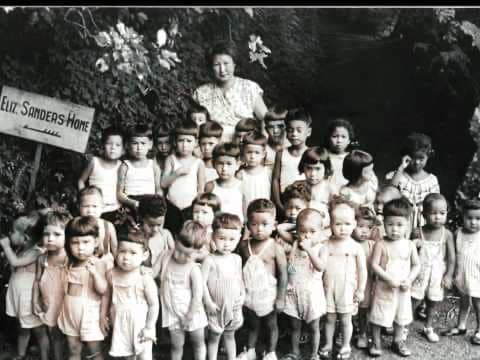
Miki Sawada was born into Mitsubishi privilege as the granddaughter of the third president. She was raised to believe in Shinto and Buddhism growing up at home, but God sent a nurse to plant the scripture “love your neighbor” from the Bible into her heart as a little girl. The scripture became the seed for her belief in Jesus that was not taken away. As an adult, Miki saw orphanages, racial exclusion and acts of mercy during her world travels.
Decades later, Miki’s belief was tested. Listening to a late night radio broadcast, she heard how bi-racial babies born in Japan were being abandoned and rejected. Their presence was seen as shameful, but were these babies her neighbor? She believed God was sending her, so she opened an orphanage called Elizabeth Saunders Home in Kanagawa Prefecture that took in these babies in order to give them a better life.
Miki’s story shows us that private memories can become public rescues. How will our belief in Jesus propel us to ensure lasting fruit is produced through our lives? Believing that our faith will remain, even when shaken, what would we try? What would join? What would we start?
Life That Can’t Be Stolen
3. We must hold on to life that can’t be stolen
Jesus does not just bring a resurrection, he is the resurrection and eternal life. This is not merely an event. Jesus wanted Martha to know in verse 25 that he was not talking about a future event like he did in John chapter 5, but he was present as the resurrection and the life, which means eternal life. Jesus has eternal life in himself. Life without end that starts immediately upon belief in the Son of God. Jesus is God in human form among us. Yes, we die physically, but believers live with God forever starting immediately upon belief. As the resurrection and the life, Jesus destroyed our enemy who had the power of death. Jesus has the keys of death which means the fear of death can no longer steal our lives locking us up in a lifetime of fear. Because Jesus is the resurrection, he destroyed death’s power by rising from death.
Perhaps like the Makioka sisters we can point to seasons of life where we felt robbed by time or circumstances. If our regrets bounce us backward to the past, remember Jesus has shown us how to hold on to love that can’t be stolen, belief that can’t be stolen and life that can’t be stolen. That gives us hope! We are no longer constrained, but freed into eternity. A 17th century poet named George Herbert once wrote, “Death used to be an executioner, but the gospel has made him just a gardner.”
Lazarus was buried in a tomb, rose from the dead and walked out with linen strips, yet died again physically, as we all do.
Jesus was also buried in a tomb. He died a criminal’s death, yet committed no crime. When the tomb was opened after three days, no body was found, only the linen cloth of his burial. His physical body was not there. He had gone to defeat death, rising from the dead, never to die again, so that we would believe. Death was our enemy, but Jesus said,“Everyone who lives and believes in me will never die.” And then he asked: Do you believe this?”
As Christians gain greater clarity about God’s ultimate worth, an act that cost Jesus everything, regret won’t easily blindfold us to what matters most. Once we know we have eternal life, this present life looks different. We understand this in our minds, but it must also penetrate our hearts. When we believe the resurrection and the life, Jesus looses us and lets us go to walk with him. He sets our regrets running, not back and forth through memories in our minds, but hammered to his cross. We hope in him…he strengthens us and walks with us through the valley of the shadow of death. We see God’s ultimate worth more clearly because of Jesus.
 Lasting Change